Why Can't I Relax? What's Actually Happening When Your Body Won't Let You Stop
by Char
|
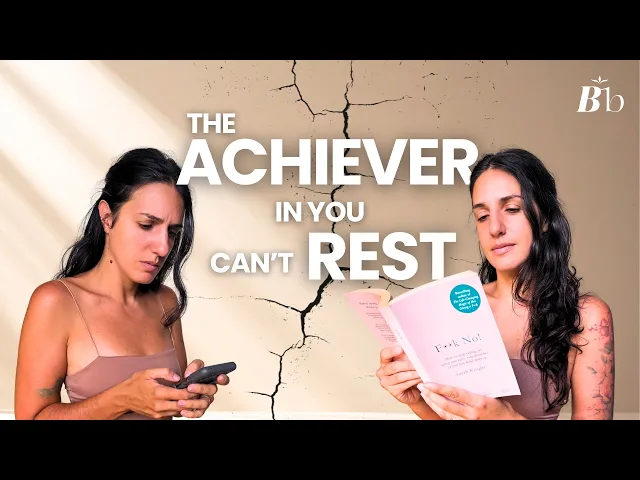
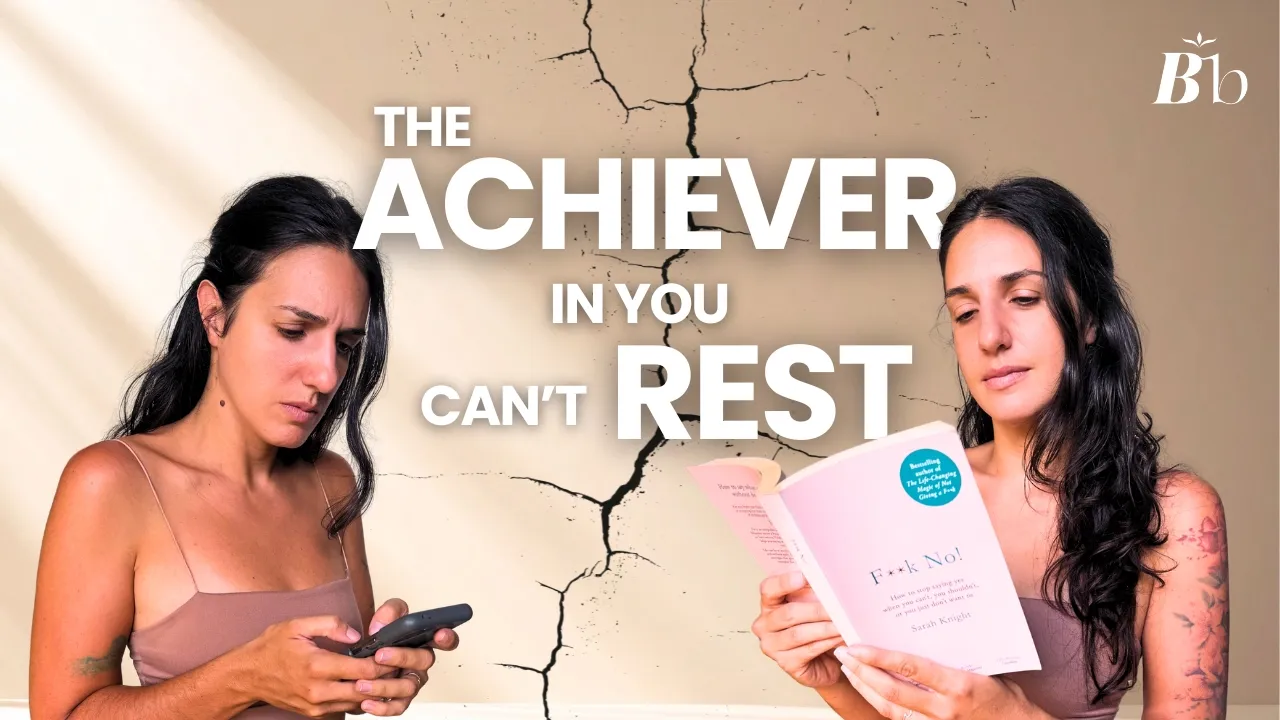
You wonder why you can't relax, and the honest answer is probably not what you're expecting. The meditation app isn't the problem. Your willpower isn't the problem. And no, you're not "just wired that way," even though you've probably told yourself that a hundred times.
What's actually happening is a neurological pattern that got installed decades ago, and it's running your weekends whether you like it or not. This article breaks down the mechanism, where it comes from, and what the research says about why high-achieving women are especially prone to it.

The Neuroscience of Why You Can't Sit Still and Relax
Let's start with what's actually going on in your nervous system when you try to rest.
Stephen Porges, the neuroscientist behind polyvagal theory, introduced a concept called neuroception. It's your nervous system's constant, unconscious scanning for cues of safety or danger. You don't control it. You don't even know it's happening most of the time. It just runs in the background, evaluating your environment and adjusting your physiological state accordingly.
Here's where it matters for you: neuroception is shaped by experience. If you spent years in environments where productivity meant safety, where being useful meant being valued, where stopping meant falling behind, your nervous system learned a very specific equation: output = safe. Stillness = exposed.
So when you sit on the couch on a Saturday with nothing to do, your system doesn't register "rest." It registers something closer to "unprotected." The buzzy, restless feeling that kicks in within minutes? That's neuroception doing its job. Your body is scanning for a threat that isn't there, but it doesn't know the threat isn't there, because it learned its threat-detection system in a completely different context.
This is why you can't just decide to relax. You're not fighting a bad habit. You're fighting a biological alarm system that genuinely believes stillness is dangerous.
Your Self-Worth Is Probably Tied to Your Output (And That Changes Everything)
The nervous system piece explains the how. But the why runs deeper.
Kristin Neff, a psychology researcher at the University of Texas at Austin, has studied something she calls contingent self-worth: the phenomenon where your sense of value depends on specific outcomes. Performance. Approval. Achievement. Her research found that people with high contingent self-worth experience more unstable feelings of self-value, more social comparison, and more reactive responses to failure or perceived inadequacy.
For high-achieving women, this wiring often started early. A parent who praised results over effort. A school system that ranked you by grades. A first job where being the hardest worker in the room was how you earned your place. Somewhere along the way, the equation became: I am valuable because I produce. I am loveable because I am useful.
That equation works beautifully in a career. It makes you driven, dependable, excellent at what you do. But it has a side effect that only shows up later: rest becomes an identity threat. Because rest has no output. Rest produces nothing you can measure, report, or show to anyone. And if your internal operating system equates worth with production, then an empty afternoon isn't a break. It's an existential question you didn't sign up for.
The guilt you feel when resting isn't about the laundry or the emails. It's your system detecting a threat to your identity, because your identity was built on a foundation that requires constant output to feel stable.
The 400-Year-Old Observation That Still Applies
Blaise Pascal, writing in the 1600s, observed that all of humanity's problems stem from our inability to sit quietly in a room alone. This was centuries before smartphones, before Netflix, before the entire infrastructure of distraction we've built around ourselves.
What Pascal identified, and what modern psychology is catching up to, is that the urge to fill silence is not a modern problem. It's a human one. We've always struggled with stillness. We've just gotten significantly more efficient at avoiding it.
This matters because it reframes the question. If you're asking why can't I relax and stop thinking, the answer isn't that you're uniquely broken or that modern life ruined your attention span. The answer is that sitting with yourself, with nothing to produce and no one to perform for, is one of the hardest things a human being can do. It always has been. And for women who've built entire identities around being the competent, reliable, always-on person in the room, it's exponentially harder.
The thinking, the mental task lists, the scrolling: those are all strategies for staying in your head. And your head is familiar territory. Your head is where the Achiever lives. Being in your body with nothing to do requires you to be someone else entirely, and that someone might feel unfamiliar, or worse, uncomfortably vulnerable.
Distraction vs. Rest: Why They Feel the Same but Do Completely Different Things
Most women I talk to believe they rest. They watch TV. They go to brunch. They scroll their phone in bed. But there's a meaningful difference between distraction and actual rest, and it's worth understanding, because confusing the two is part of what keeps the cycle going.
Distraction keeps your brain occupied without requiring presence. You can watch an entire series and not remember a single scene because you were also planning tomorrow's meeting in your head. You can spend two hours scrolling and feel more drained afterward than before. Distraction is what your system allows when full productivity isn't possible. It's a compromise: you're not working, but you're not actually resting either. You're in a holding pattern.
Rest requires something different. It requires being in your body without a task, a screen, or a mental to-do list filling the space. It requires tolerating the absence of stimulation. And for many high-achieving women, that tolerance hasn't been built, because their systems have been in overdrive for so long that the absence of input feels like an alarm.
Think of it this way:
📱 Distraction = your brain is busy, your body is idle
🧘 Rest = your brain is quiet, your body is settled
⚡ What most "relaxation" actually is = distraction dressed up as downtime
If you've ever come back from a vacation feeling more tired than when you left, or spent a "lazy Sunday" scrolling for three hours and felt vaguely irritated afterward, you've experienced the difference firsthand. Your system got distraction when it needed rest, and the deficit carried over.

The Two Archetypes Behind the Pattern
In the podcast episode that goes with this article, I talk about this as a tension between two archetypes that coexist inside the same woman. I call them the Achiever and the Quiet One.
The Achiever is the one who built everything. She's competent, fast, effective. She has very specific rules about what constitutes a valuable use of time. She's been in charge for so long that her voice sounds like your own thoughts.
The Quiet One is the version of you who existed before the career, before the identity got built around output. She's the one who used to read for hours, listen to music without checking the time, sit still without needing a reason. She didn't go anywhere. She just stopped getting airtime.
What makes this framework useful is that it takes the guilt out of the abstract and makes it specific. The productivity guilt you feel when resting isn't some vague character flaw. It's the Achiever panicking because the Quiet One is trying to surface, and the Achiever doesn't know who you are when nothing needs doing.
Understanding this changes how you approach the problem. You stop trying to "fix" your inability to rest (which implies something is broken) and start recognizing that two legitimate parts of you have competing needs, and one has been running the show for decades.
A Practical Approach: Get the Achiever to Cooperate
Most advice about rest tells you to fight the Achiever. Slow down. Stop hustling. Say no more often. This advice is technically correct and almost entirely useless for women who've built their lives on output, because the Achiever is too strong, too embedded, and too integral to who you are to be overridden by a motivational Instagram post.
A smarter approach: use her own language against her.
If the Achiever responds to structure, give her structure. Schedule rest. Put it in your calendar the way you'd put a client meeting. Tuesday, 7pm to 8pm: nothing. Non-negotiable.
It sounds ridiculous to schedule doing nothing. But that's the point. You're not trying to kill the Achiever. You're getting her buy-in by framing rest as a task she can track. And over time, something shifts. Your nervous system accumulates evidence that stillness doesn't lead to catastrophe. The calendar block stops being about permission and starts being about habit. Eventually, you don't need the entry at all.
This approach comes from a conversation with my Threads community, where one woman described doing exactly this after years of failed attempts at rest. She said the key was stopping the war between the two parts of herself and getting them to collaborate instead. The Achiever gets her structure. The Quiet One gets her time. Neither one has to disappear for the other to exist.
One Experiment to Try This Week
The next time you have fifteen unstructured minutes, sit down and just pay attention to what happens. Don't try to relax. Don't breathe a specific way. Don't do anything.
Just notice: does your stomach tighten? Do your legs start bouncing? Do you feel a pull to stand up, check something, go somewhere? Does an "urgent" task suddenly appear in your mind that definitely wasn't urgent five minutes ago?
That's the pattern in action. And if you can notice it, if you can register oh, that's the Achiever activating, you've already introduced a gap between the impulse and the response. That gap is where things start to change.
Stay on the couch for five more minutes after the impulse to get up. That's the whole experiment. Five minutes of tolerating the discomfort of having nothing to do. It will feel pointless. It might feel genuinely unpleasant. But what you're doing is giving your nervous system a new data point: stillness is survivable. Nothing collapsed. You're still here.
Over time, survivable becomes tolerable. Tolerable becomes comfortable. Comfortable eventually becomes something you look forward to. But it starts with five minutes of staying put when every cell in your body wants you to move.

FAQ: Common Questions About Rest, Guilt, and the Inability to Relax
Why do I feel guilty when I'm not doing anything?
Because your self-worth was likely wired to output from an early age. Kristin Neff's research on contingent self-worth shows that when value depends on performance, any unproductive moment gets flagged as a threat by your internal system. The guilt is the alarm, not the problem itself.
Is it normal to feel anxious when resting?
For women who've spent years in high-performance roles, yes. Porges's concept of neuroception explains why: your nervous system learned to associate action with safety. When the action stops, the system reads it as exposure and ramps up your stress response. The anxiety isn't irrational from your body's perspective. It's doing what it was trained to do.
How do I stop feeling guilty about resting?
The short version: stop fighting the guilt and start building tolerance to it. Schedule rest as a non-negotiable block so your Achiever has structure to hold onto. Over time, your nervous system accumulates enough evidence that stillness is safe, and the guilt response weakens. This is retraining, not willpower.
Why can't I relax even on vacation?
Because the pattern is internal, not environmental. Your nervous system doesn't know you're in a different country. It's running the same threat-detection loop it runs at home: scan, generate tasks, stay useful. A change of scenery doesn't reset the wiring. Targeted practice with stillness does.
What's the difference between rest and distraction?
Distraction keeps your brain occupied without requiring your body to settle. Scrolling, binge-watching with your phone in your hand, mentally planning while at brunch. Rest requires being present in your body without stimulation. If your brain was busy the whole time, you were distracted, not rested, and your nervous system knows the difference even if you don't.
You May Like