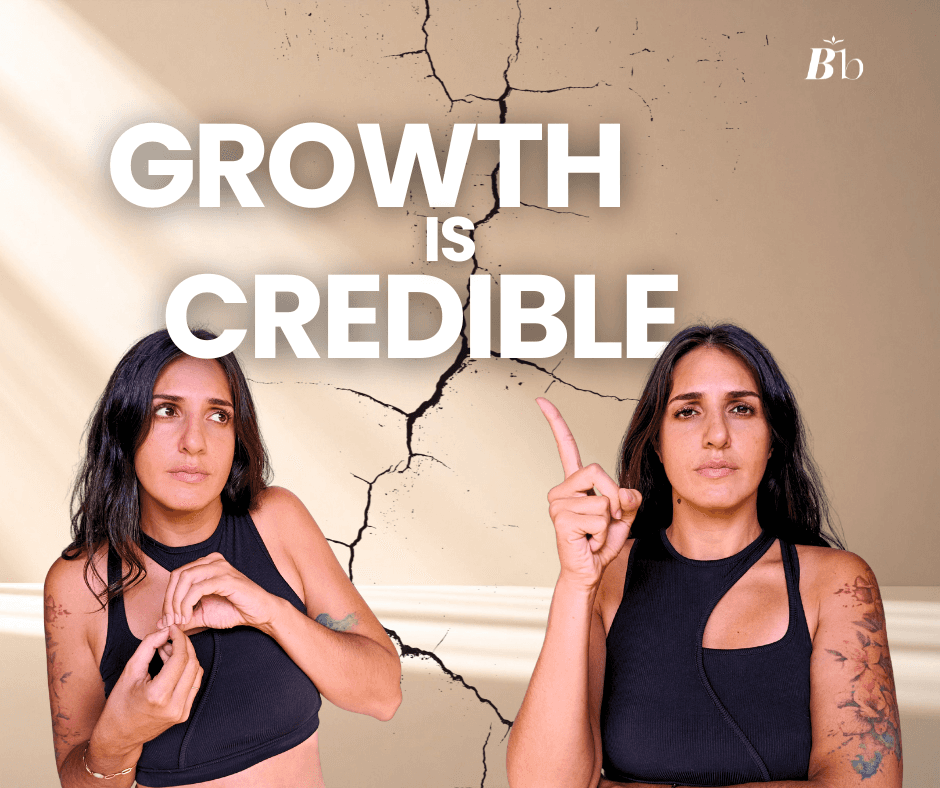
Feeling Stuck and Unmotivated? Why Wanting More and Doubting Yourself Is Normal
by Char
|


If you’re feeling stuck and unmotivated, there’s a good chance it doesn’t come from laziness, lack of ambition, or not “wanting it enough.”
Very often, it comes from wanting more out of life while simultaneously being afraid of what that wanting implies.
You might feel a pull toward something else… a different version of yourself, a different rhythm of life, a project, a skill, a place, a way of being. And at the same time, you feel frozen. Hesitant. Full of doubt.
This inner conflict can feel exhausting.
And because we don’t talk about it clearly, many people interpret it as a personal failure.
But here’s the reframe most people never talk about:
Feeling stuck is often what happens when hope and fear are both active at the same time.
This is why that happens (psychologically, neurologically, and philosophically) and how to stop feeling stuck without forcing confidence or silencing doubt.
Why Feeling Stuck and Unmotivated Is Often an Inner Conflict
Most advice about feeling stuck assumes one thing:
That you don’t want enough. That you're not motivated enough.
So you’re told to:
💪 “Get clearer on your goals”
🧠 “Visualize harder”
🚀 “Take massive action”
😤 “Push through fear”
But what if the issue isn’t a lack of desire, or a motivation problem?
What if the issue is that two parts of you want different things at the same time?
One part wants expansion.
Another part wants safety.
That tension creates inner conflict. And when inner conflict isn’t understood, it often turns into:
Procrastination
Overthinking
Emotional shutdown
Harsh self-criticism
Or the vague sense of being “stuck” without knowing why
To understand how to resolve inner conflict, we first need to name the two voices that usually create it.
The Dreamer: The Part of You That Wants More Out of Life
The dreamer is the part of you that imagines.
It’s the voice that says:
There has to be more than this.
I could become someone else.
This version of my life doesn’t feel finished.
This part isn’t reckless or unrealistic by default. It’s directional.
Let me explain:
Psychologically, researchers like Daphna Oyserman, who developed the theory of possible selves, show that imagining yourself in a future state doesn’t guarantee success, but it increases the likelihood of action by giving your behavior a direction.
Every skill you have today, every choice you’re proud of, every life change you made… at some point, it existed only as an internal image.

And yet, culturally, we’re taught to distrust this part of ourselves.
We call it:
“Unrealistic”
“Childish”
“Not responsible”
“Just dreaming”
But suppressing the dreamer doesn’t make life feel safer. It usually makes it feel smaller.
The Doubter: Why Fear Shows Up When Dreams Start Feeling Real
Then there’s the doubter.
This voice often gets loud right after a dream starts to feel actionable.
Not when it’s abstract, but when it moves from:
“One day, maybe…”
to
“I could actually try.”
This isn’t a coincidence.
From a neuroscience perspective, doubt is strongly linked to the brain’s threat-detection systems.
Researchers like Joseph LeDoux explain that parts of our brain evolved to prioritize survival over logic.
Novelty, uncertainty, and potential social rejection all trigger the same systems that once protected us from physical danger.
So when you think about:
Changing direction
Being seen trying
Failing publicly
Leaving something familiar
Your nervous system may react as if you’re putting yourself at risk. Even if rationally, you know you’re not.
That’s why self-doubt feels so convincing.
Inner Conflict Example: Wanting More but Feeling Frozen
This is where many people get confused.
You want more out of life. But the moment you imagine moving toward it, you feel anxious, overwhelmed, or blocked.

So you conclude:
“I must not really want this.”
or
“If I were meant for this, it wouldn’t feel so hard.”
But what’s actually happening is simultaneous activation:
🔥 The dreamer activates motivation, dopamine, and arousal
🛡️ The doubter activates stress responses and withdrawal
Your body doesn’t clearly distinguish between danger and importance. And both feel intense.
So caring deeply about something can feel almost indistinguishable from being threatened by it.
This is one of the most common inner conflict examples. And it explains why so many motivated, thoughtful people still feel stuck.
Why Pushing Through Doubt Often Makes You More Stuck
We tend to treat doubt as something to eliminate.
Culturally, we glorify:
Confidence
Certainty
Hustle
“No fear” narratives
But suppressing doubt doesn’t resolve inner conflict.
It usually suppresses it, and it comes back as:
Burnout
Chronic stress
Emotional numbness
Or giving up entirely
Here’s something important that rarely gets said:
People who don’t care rarely doubt.
Doubt is often proportional to emotional investment.
If something truly means nothing to you, there’s no internal struggle.
So feeling stuck and unmotivated doesn’t mean you’re disengaged.
Very often, it means you care, and your system doesn’t yet feel safe enough to move.
How to Stop Feeling Stuck by Turning Doubt Into Information
One of the most powerful shifts you can make is this:
Stop asking, “What’s wrong with me?”
Start asking, “What is this reaction trying to protect?”
From acceptance-based approaches (like ACT), we know that naming and noticing fear reduces its intensity.
Practically, this looks like:
Naming the fear instead of arguing with it
Separating the signal from the story
Treating doubt as data, not a verdict
The signal might be:
📚 I need more information.
❤️ This matters to me.
🛟 I’m afraid of losing safety or belonging.
The story is usually catastrophic:
❌ I’ll fail.
😳 I’ll look stupid.
🧨 This proves I’m not cut out for this.
Learning how to resolve inner conflict doesn’t mean eliminating fear. It means regulating it enough to move with it.
The Window of Tolerance: Why Gentle Expansion Is Better Than Forcing Confidence
Psychiatrist Dan Siegel describes the Window of Tolerance: the range in which we can feel emotions without becoming overwhelmed or shut down.
When dreams push us outside that window, the nervous system reacts with:
Anxiety (hyper-arousal)
Or shutdown (hypo-arousal)
That’s when people feel stuck.
The solution isn’t pushing harder.
It’s gradual exposure:
Small steps
Repeated experiences
Allowing discomfort without interpreting it as danger
Over time, the nervous system learns:
Discomfort does not equal death.
That’s how doubt becomes quieter. Not by force, but by familiarity.
Why You Don’t Need to Choose Between Dreaming and Doubting
Philosophically, this tension isn’t new.
Existential thinkers like Kierkegaard argued that uncertainty is inherent to being human, and that meaning comes from choosing despite it, not after it disappears.
Many Eastern philosophies echo the same idea:
Strength and softness
Fear and desire
Action and acceptance
They don’t ask you to resolve contradictions. Only to live with them skillfully.
You are not inconsistent because you feel both hope and fear. You are complex.
So, here’s the final reframe.
The dreamer gives direction.
The doubter provides boundaries.
And you are the mediator… not the battlefield.
Not every dream needs to be followed. But none of them need to be killed.
When these parts stop fighting for control, something shifts:
Less internal resistance
More sustainable action
Fewer emotional crashes
That’s how movement becomes possible again.
Final Thoughts: Feeling Stuck Is Not a Dead End
You don’t need perfect confidence to move forward.
And you don’t need to silence doubt to honor what you want.
Most growth doesn’t come from choosing one voice over the other.
It comes from learning how to listen to both, without letting either run your life.
If you’re feeling stuck and unmotivated, it doesn’t mean you’re failing.
Very often, it means you’re standing at the edge of something that matters.
You May Like