Why am I not being taken seriously?

by Char

|
Feb 6, 2026

|

Archetypes

Series

Archetypes

Series

If you’ve ever asked yourself “why am I not being taken seriously?”, chances are it wasn’t because you lacked skills, intelligence, or discipline.

More often than not, it’s because you don’t look the part.

You might be expressive. Light. Playful. Joyful.
You might joke, laugh easily, enjoy life loudly… and somehow, that gets translated into “not serious enough.”

And so, slowly, quietly, you start toning yourself down. Because being yourself seems to come at a cost.

This article is a continuity to the myth of the one true self, and why trying to compress yourself into a single “acceptable” identity is often the real reason people feel underestimated, illegitimate, or stuck in imposter syndrome.

The quiet rule we all learn

Growing up, being fun is often rewarded.

You’re the one people like.
The one who lightens the mood.
The one who doesn’t take themselves too seriously.

But somewhere along the way, the rules change.

Suddenly:

🧱 Seriousness equals legitimacy
🎓 Neutrality equals intelligence
🧠 Control equals credibility

And if you don’t align with that unspoken code, you start feeling… off.

Not openly rejected… just subtly questioned.

Growing up, being fun is often rewarded.

You’re the one people like.
The one who lightens the mood.
The one who doesn’t take themselves too seriously.

But somewhere along the way, the rules change.

Suddenly:

🧱 Seriousness equals legitimacy
🎓 Neutrality equals intelligence
🧠 Control equals credibility

And if you don’t align with that unspoken code, you start feeling… off.

Not openly rejected… just subtly questioned.

When being playful becomes a liability

Many people who feel not being taken seriously didn’t suddenly become incompetent.

What changed was context.

The same traits that made you likable:

  • humor

  • expressiveness

  • lightness

start being reinterpreted as:

  • lack of rigor

  • lack of focus

  • lack of depth

This happens a lot at university, in the workplace, or in relationships.

You’re no longer “fun”. You’re “not the obvious choice.” And that’s where the self-doubt creeps in.

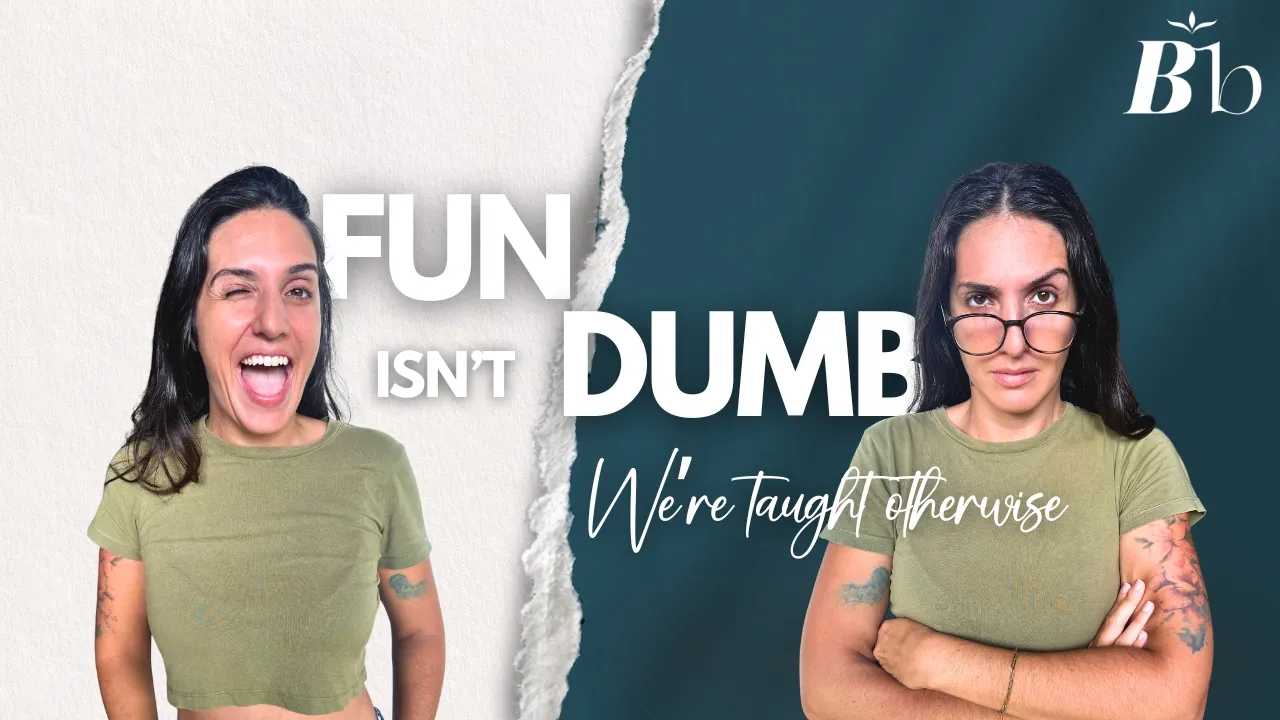
Fun woman makes a silly face

Many people who feel not being taken seriously didn’t suddenly become incompetent.

What changed was context.

The same traits that made you likable:

  • humor

  • expressiveness

  • lightness

start being reinterpreted as:

  • lack of rigor

  • lack of focus

  • lack of depth

This happens a lot at university, in the workplace, or in relationships.

You’re no longer “fun”. You’re “not the obvious choice.” And that’s where the self-doubt creeps in.

Fun woman makes a silly face

Being underestimated hurts in a very specific way

Being underestimated doesn’t usually sound like an insult.

It sounds like:

  • “You’re a bit of a special case.”

  • “Let’s see how that goes.”

  • “No one really knows how you made it here.”

Said with a smile.
Wrapped in humor.
Dismissed as harmless.

But over time, it lands.

And you start wondering:

Maybe they’re right.
Maybe I don’t belong.

That’s how people slowly internalize the belief that they are not legitimate, even when the evidence says otherwise.

Being underestimated doesn’t usually sound like an insult.

It sounds like:

  • “You’re a bit of a special case.”

  • “Let’s see how that goes.”

  • “No one really knows how you made it here.”

Said with a smile.
Wrapped in humor.
Dismissed as harmless.

But over time, it lands.

And you start wondering:

Maybe they’re right.
Maybe I don’t belong.

That’s how people slowly internalize the belief that they are not legitimate, even when the evidence says otherwise.

Imposter syndrome isn’t about competence

Most people struggling with imposter syndrome are already performing well.

They:

  • get accepted into programs

  • meet or exceed expectations

  • deliver results

  • grow businesses

  • learn fast

Yet the doubt remains.

Why?

Because imposter syndrome is rarely about ability. It’s often identity mismatch.

When who you are doesn’t match what society expects competence to look like, your brain fills the gap with self-doubt.

Most people struggling with imposter syndrome are already performing well.

They:

  • get accepted into programs

  • meet or exceed expectations

  • deliver results

  • grow businesses

  • learn fast

Yet the doubt remains.

Why?

Because imposter syndrome is rarely about ability. It’s often identity mismatch.

When who you are doesn’t match what society expects competence to look like, your brain fills the gap with self-doubt.

The myth of the one true self

We’re often told:

  • “Just be yourself”

  • “Find your true self”

  • “This isn’t you”

But what if that advice is part of the problem?

The idea that there is one correct version of you (playful or serious, emotional or competent) is deeply limiting.

Humans are not singular identities.
We are contextual, adaptive, and multifaceted.

And trying to reduce yourself to one acceptable self creates tension, internally and externally.

We’re often told:

  • “Just be yourself”

  • “Find your true self”

  • “This isn’t you”

But what if that advice is part of the problem?

The idea that there is one correct version of you (playful or serious, emotional or competent) is deeply limiting.

Humans are not singular identities.
We are contextual, adaptive, and multifaceted.

And trying to reduce yourself to one acceptable self creates tension, internally and externally.

What psychology actually says about play

Contrary to popular belief, playfulness isn’t the opposite of intelligence.

From an evolutionary standpoint:

  • play increases cognitive flexibility

  • curiosity improves learning retention

  • dopamine enhances focus and memory

Animals learn through play and imitation. Humans are no different.

Playfulness doesn’t mean lack of discipline. It often means regulation.

It’s what happens when the nervous system feels safe enough to let go.

Contrary to popular belief, playfulness isn’t the opposite of intelligence.

From an evolutionary standpoint:

  • play increases cognitive flexibility

  • curiosity improves learning retention

  • dopamine enhances focus and memory

Animals learn through play and imitation. Humans are no different.

Playfulness doesn’t mean lack of discipline. It often means regulation.

It’s what happens when the nervous system feels safe enough to let go.

When your body starts speaking for you

For a long time, I thought I could just push through.

If something felt off, I’d tighten my grip, stay disciplined, and keep going.

Until my body forced me to stop… with a herniated disc.

Looking back, it didn’t come out of nowhere. It came after years of trying to hold myself together in ways that didn’t fully fit me anymore. Trying to be controlled, composed, taken seriously… even when it meant muting parts of myself.

When you keep parts of yourself quiet for too long, they don’t disappear.
They find other ways to show up.

Tension.
Burnout.
Pain.

Not as punishment, but as a signal. Just asking you to stop shrinking yourself.

A woman has back pain and massages her upper back with her hand


For a long time, I thought I had to choose: Either be playful and expressive, or be someone people take seriously.

So I edited myself. Depending on the room. Depending on the context.

What I’m slowly unlearning is this: credibility doesn’t come from removing parts of yourself. It comes from trusting that your range doesn’t cancel out your competence.

You can be:

  • expressive and skilled

  • joyful and disciplined

  • light and credible

Small but powerful shifts:

🛑 Stop downplaying yourself before anyone asks
📊 Let results speak before explanations
👀 Notice when you self-censor “just in case”
🌀 Reconnect with embodied expression (movement, creativity, play)

For a long time, I thought I could just push through.

If something felt off, I’d tighten my grip, stay disciplined, and keep going.

Until my body forced me to stop… with a herniated disc.

Looking back, it didn’t come out of nowhere. It came after years of trying to hold myself together in ways that didn’t fully fit me anymore. Trying to be controlled, composed, taken seriously… even when it meant muting parts of myself.

When you keep parts of yourself quiet for too long, they don’t disappear.
They find other ways to show up.

Tension.
Burnout.
Pain.

Not as punishment, but as a signal. Just asking you to stop shrinking yourself.

A woman has back pain and massages her upper back with her hand


For a long time, I thought I had to choose: Either be playful and expressive, or be someone people take seriously.

So I edited myself. Depending on the room. Depending on the context.

What I’m slowly unlearning is this: credibility doesn’t come from removing parts of yourself. It comes from trusting that your range doesn’t cancel out your competence.

You can be:

  • expressive and skilled

  • joyful and disciplined

  • light and credible

Small but powerful shifts:

🛑 Stop downplaying yourself before anyone asks
📊 Let results speak before explanations
👀 Notice when you self-censor “just in case”
🌀 Reconnect with embodied expression (movement, creativity, play)

What being taken seriously really means

You can never be taken seriously by just managing perception.

Saying the right things.
Looking composed enough.
Sounding confident enough.

That’s exhausting, and never fully in your control.

What actually changes things is quieter: self-trust.

When you stop asking for permission to exist fully, something shifts.
In how you speak.
In how you decide.
In how quickly you stop backtracking.

And often, that’s when others start responding differently too.

Not because you changed who you are, but because you stopped hiding parts of yourself.

You can never be taken seriously by just managing perception.

Saying the right things.
Looking composed enough.
Sounding confident enough.

That’s exhausting, and never fully in your control.

What actually changes things is quieter: self-trust.

When you stop asking for permission to exist fully, something shifts.
In how you speak.
In how you decide.
In how quickly you stop backtracking.

And often, that’s when others start responding differently too.

Not because you changed who you are, but because you stopped hiding parts of yourself.

This is just the start!

Be part of The Bold Beginner community

Be a part of the early days. I’ll share occasional reflections, behind-the-scenes thoughts, and what I’m building… straight to your inbox, as it grows.

By Registering you agree to the privacy policy

A woman is standing in a boho styled house, with an open body posture. Her arms and hands are opened, ready to give and receive

This is just the start!

Be part of The Bold Beginner community

Be a part of the early days. I’ll share occasional reflections, behind-the-scenes thoughts, and what I’m building… straight to your inbox, as it grows.

By Registering you agree to the privacy policy

A woman is standing in a boho styled house, with an open body posture. Her arms and hands are opened, ready to give and receive

This is just the start!

Be part of The Bold Beginner community

Be a part of the early days. I’ll share occasional reflections, behind-the-scenes thoughts, and what I’m building… straight to your inbox, as it grows.

By Registering you agree to the

privacy policy.