Why Are My Hobbies Not Fun Anymore?
by Char
|
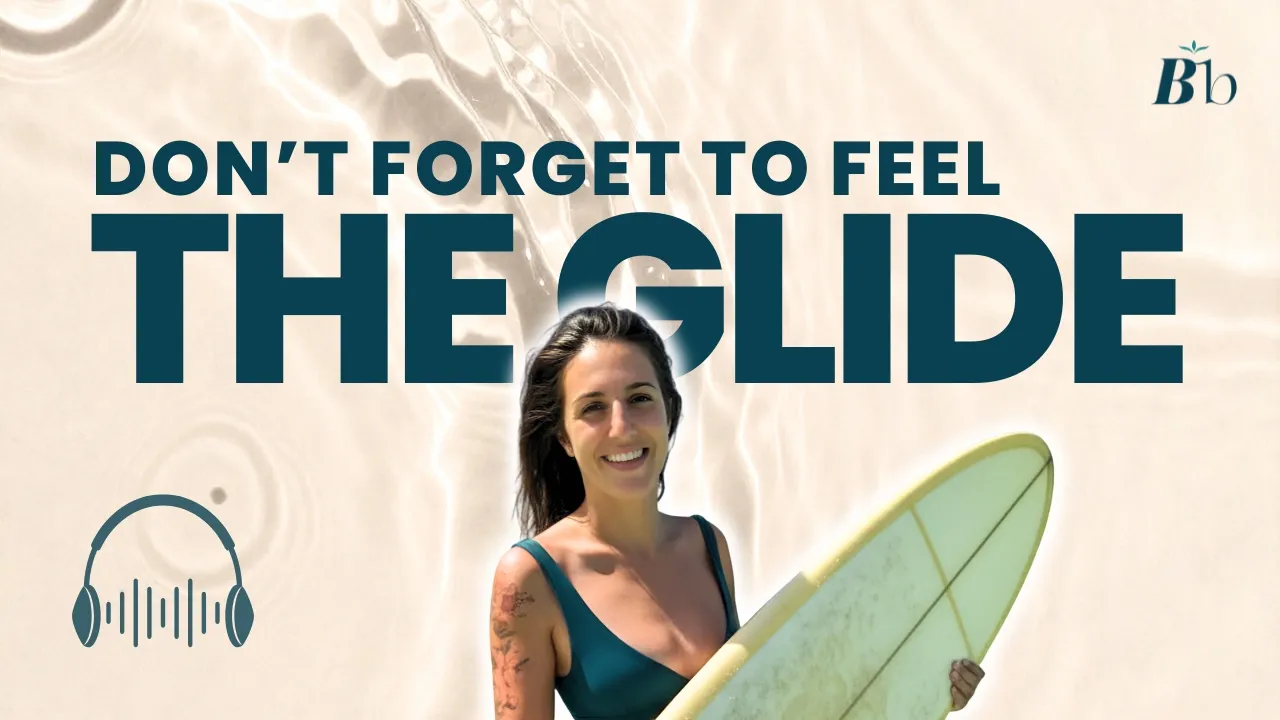
Something happens when you've been doing an activity for a while. It starts as something that just feels good. And then at some point, without you really noticing, it stops being about the feeling and starts being about the progress. If your hobbies are not fun anymore, that quiet shift is probably why.
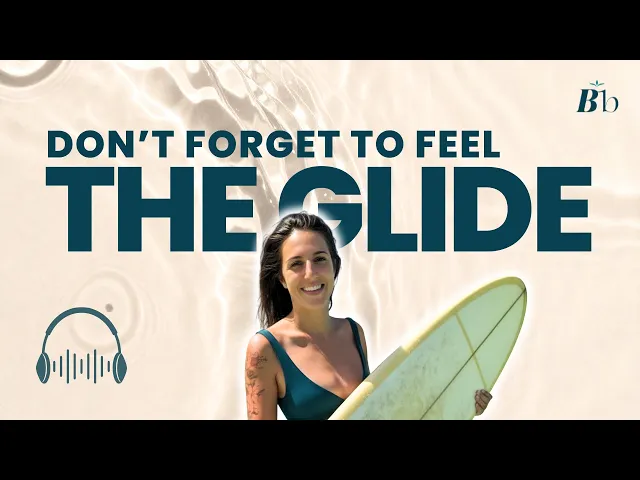
I figured this out through surfing. Or, more accurately, through breaking my nose twice on my own board, burning out, spending two years away from the water, and slowly realizing that I'd turned the thing I loved most into something I needed to perform at.
When Progress Becomes the Point (and Fun Disappears)
There's a moment that happens in almost every hobby, sport, or creative pursuit. You start because it feels good. You're drawn to it. There's curiosity, excitement, maybe a little bit of nervousness. And for a while, that's enough.
Then, slowly, a goal appears. Maybe you set it yourself. Maybe the culture around the activity sets it for you. Either way, the energy shifts from being in it to getting somewhere with it.
For me, it was surfing. I started on a longboard, which is the standard path for beginners. But in my mind, the longboard was never the destination. It was the stepping stone to a shortboard: shorter board, bigger waves, harder tricks. That was the "real" surfing. Everything before that was just training.
I didn't even question that assumption. It felt so obvious that I didn't recognize it as a choice. Progress was the metric. Fun was less and less in the equation.
And if you'd asked me at the time whether I was enjoying myself, I would have said yes. Because I was, on some level. But there was a constant undercurrent of not there yet running through every session. A quiet pressure that turned it all into performance.
The Culture Around Your Hobby Is Setting Your Goals for You
Here's something most of us don't notice: the goals we set for our hobbies often aren't actually ours.
Every activity has a culture, and every culture has an unspoken hierarchy. In surfing, longboard is for beginners. Shortboard is where the "real" surfers are. In yoga, it's the advanced poses. In running, it's the pace, the distance, the race. In art, it's the style, the technique, the following. Whatever the activity, there's a version of success that gets held up as the standard, and most of us absorb it without ever asking whether it matches what we actually want.
Psychologists Edward Deci and Richard Ryan, who developed Self-Determination Theory, have studied this dynamic extensively. Their research shows that intrinsic motivation, doing something because it's inherently satisfying, is what keeps us engaged and fulfilled over the long term. But when external benchmarks start driving the activity (performance metrics, social comparison, cultural expectations), intrinsic motivation erodes. They call this the overjustification effect: the more external structure you layer onto something you already enjoy, the less you enjoy it for its own sake.
That's exactly what happened to me. I wanted a shortboard because that's what the culture said I should want. I was chasing an image of myself at a level I hadn't reached yet, and that image was louder than the actual experience of being on the water.
Why Your Body Might Already Be Telling You to Slow Down
If you're wondering why don't I enjoy my hobbies anymore, your body might actually have the answer before your mind does.
My surf teacher used to tell me, constantly, that my hips were stiff. We'd laugh about it. It became our running joke. But looking back, it was much more than a technical issue. My body was locked up. Tight. Gripping. Holding on for dear life when it should have been loose and flowing.
And then I broke my nose. On my own board. I fell, didn't protect my face, and my board hit me straight on. I dealt with it, took some time off, got back in the water, and eventually got back on the same board that broke my nose.
And it happened again. Same board. Second broken nose.
I treated both incidents like bad luck. Like something that happened to me. But they weren't accidents in the way I told myself they were. My body was sending signals I was refusing to read. It was telling me I was burning steps, forcing a pace that wasn't mine, demanding things from it that it wasn't ready to give.
Dr. Gabor Maté writes about this pattern in When the Body Says No: the way we override our body's signals because the goals in our mind are louder than the feelings in our body. We push past fatigue, past stiffness, past pain, because the culture around us rewards pushing through. And then we wonder why the body eventually forces us to stop.
The reason why your body is stiff during exercise or movement isn't always a flexibility problem. Sometimes it's a signal. Your body tightens up, grips, holds on, because it doesn't feel safe in the pace or the intensity you're demanding. And when you keep overriding that signal, the body eventually escalates. For me, that escalation was two broken noses and then a full burnout that pulled me out of the water entirely.
What Two Years Away Actually Taught Me
Burnout took me out of the water for about two years. It wasn't surfing-related specifically, but it was everything-related. My body had been running the same pattern across every area of my life: push, override, ignore signals, crash.
During those two years, I didn't touch a board. I didn't get close to the ocean in that way. And somewhere in that space, without me trying to force it, something quietly rearranged itself.
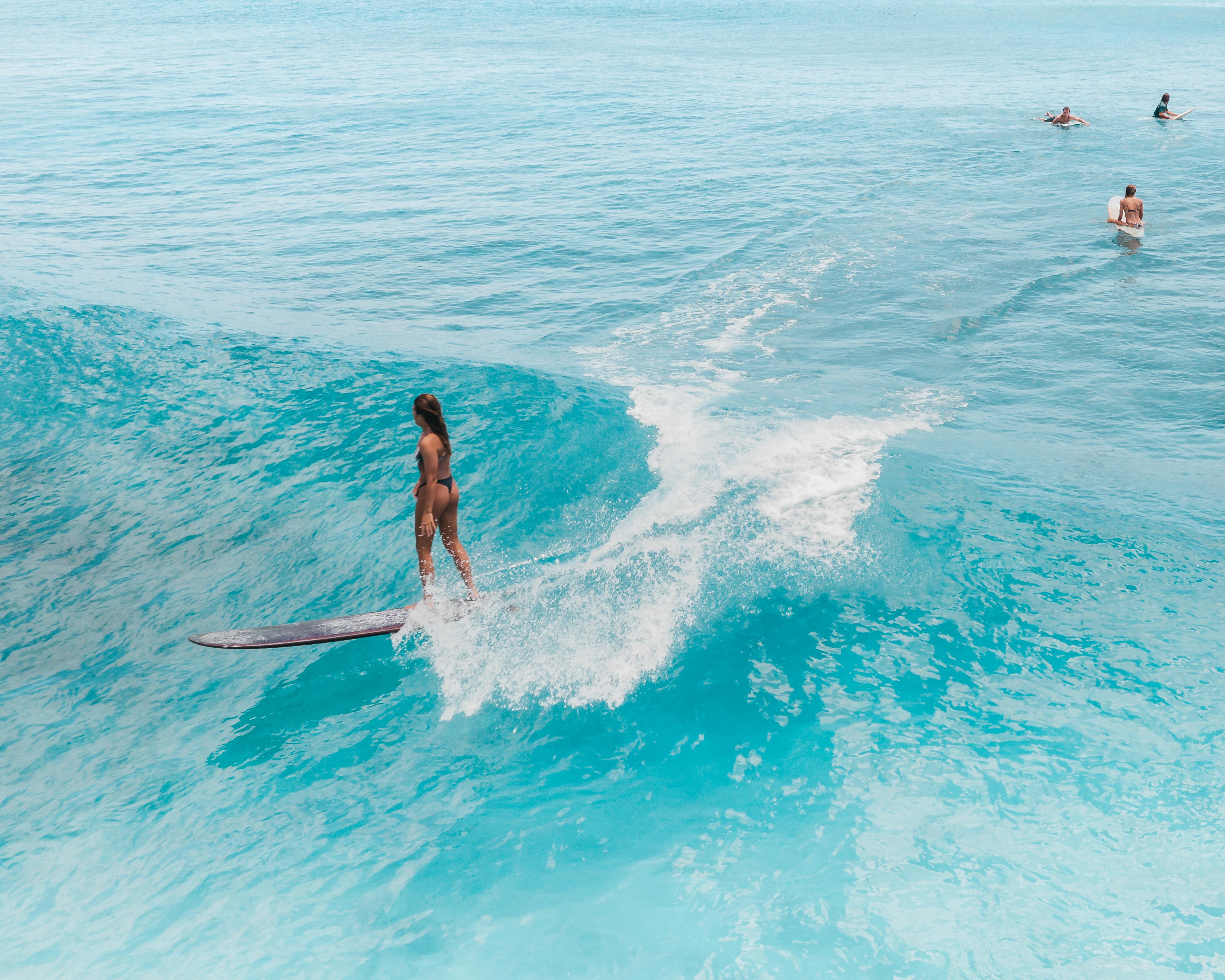
I stopped wanting bigger waves. I stopped wanting a shortboard. What I actually wanted, once I cleared away all the performance noise, was small waves, long rides, salt in my hair, and the feeling of glide.
There's an interesting fact in surf culture that I learned recently: surfers who move to shortboard too fast often never develop a real sense of glide. They skip the phase where you learn to feel the wave under you, to work with it instead of fighting it. They jump straight to the technical, demanding thing and miss the best part entirely.
That was me. I was so focused on getting to the next level that I was going to skip the thing that makes surfing feel like surfing.
Why Letting Go of the Goal Isn't Giving Up
Admitting that I didn't want bigger waves, that I just wanted it to be fun, felt almost like giving up. Like downgrading my ambitions. Like settling.
But think about it differently. Why do you put so much pressure on yourself in the first place? And where did that pressure actually come from?
Most of the time, it came from absorbing the goals of the culture around the activity without ever checking whether those goals were yours. You wanted the faster time because the app was tracking it. You wanted the advanced class because that's what progression looks like. You wanted the shortboard because that's what "real surfers" ride.
Letting go of those borrowed goals is actually the harder thing, because it means sitting with a version of yourself that doesn't have the impressive trajectory, that isn't "going somewhere," that is just... here. Doing the thing. Feeling it.
It's worth noting that most professional athletes, when asked how it all started for them, say the same thing: it started with fun. Pure enjoyment. The discipline and the ambitious goals came years later. The foundation was always play.
How to Tell If You've Turned Your Hobby Into a Performance
You might not recognize the pattern because it's so normalized. Here are some questions worth sitting with:
✨ Do you feel pressure about your hobby even though no one is evaluating you?
✨ Is there an image of yourself at a "better" level that's driving the whole thing?
✨ Would you still do it if you knew you'd never improve beyond where you are right now?
✨ Has the activity started to feel like something you should do rather than something you want to do?
✨ When you finish a session, do you evaluate how it went, or do you just feel how it felt?
If the honest answers to those questions make you uncomfortable, that discomfort is useful. It's the gap between where the culture has been pointing you and where your body actually wants to be.
Coming Back to Your Body (and to Fun)
I've spent the last two years doing a lot of hip work, a lot of body reconnection, a lot of learning to actually feel what's happening below my neck instead of just listening to the goals in my head.
And now that I'm about to get back in the water for the first time, I'm genuinely curious about what that's going to feel like on a board. Not attached to any outcome. Not expecting a transformation. Just curious. I wonder what this will feel like has replaced I need to get better, and that shift feels bigger than any progression I ever chased.
I'm scared, honestly. Two broken noses gave me a fear of waves I didn't use to have. But I'm also excited in a way that feels clean, like it's not contaminated by ambition. I just want to be out there. On a big, friendly longboard. In small, gentle waves. Feeling the glide.
"The goal in my head had become louder than the feeling in my body. And my body had sent me all the signals in the world. I just wasn't listening."
If you've been wondering why your hobbies aren't fun anymore, the answer might not be that you need a new hobby. It might be that you need to strip the performance layer off the one you already have. Stop chasing the next level. Let yourself be where you are. And notice whether the thing itself, without the goal, without the image, without the metric, still feels good.
It probably will. It probably always did. You just forgot because you were too busy getting somewhere.
FAQ
Why did I lose interest in my hobbies?
Losing interest often happens when the motivation shifts from internal enjoyment to external benchmarks. If your hobby has become about progress, comparison, or reaching a certain level, the original spark of pleasure gets buried under pressure. Research by Deci and Ryan on intrinsic motivation suggests that layering external goals onto inherently enjoyable activities reduces the internal satisfaction you get from them. It's rarely that you lost interest in the activity itself. You lost touch with the version of it that was just for you.
How do I enjoy hobbies without being competitive?
Start by noticing where the competition is actually coming from. Is it from you, or from the culture around the activity? Many hobbies have built-in hierarchies (beginner, intermediate, advanced) that create an implied race even when no one is keeping score. Try removing the tracking: no apps, no metrics, no benchmarks for one week. Just do the thing and notice how it feels in your body without evaluating whether you did it well.
Can burnout make you lose interest in hobbies?
Yes. Burnout doesn't just affect work; it drains your capacity for pleasure across the board. When your nervous system is in a state of chronic exhaustion, even activities that used to feel restorative can start feeling like demands. The body prioritizes survival over enjoyment. Coming back to hobbies after burnout often requires a different relationship with the activity: slower, gentler, with no expectations attached.
Why is my body stiff when I exercise?
Physical stiffness during movement isn't always a flexibility issue. It can be a stress response. When your body doesn't feel safe in the pace or intensity you're demanding, it tightens up as a form of self-protection. Stiff hips, locked shoulders, a tight jaw during exercise can all be body signals telling you that something about the way you're moving isn't aligned with what your body actually needs. Slowing down, softening, and paying attention to what feels good rather than what looks right can make a real difference.
You May Like